.svg)
.svg)
.svg)
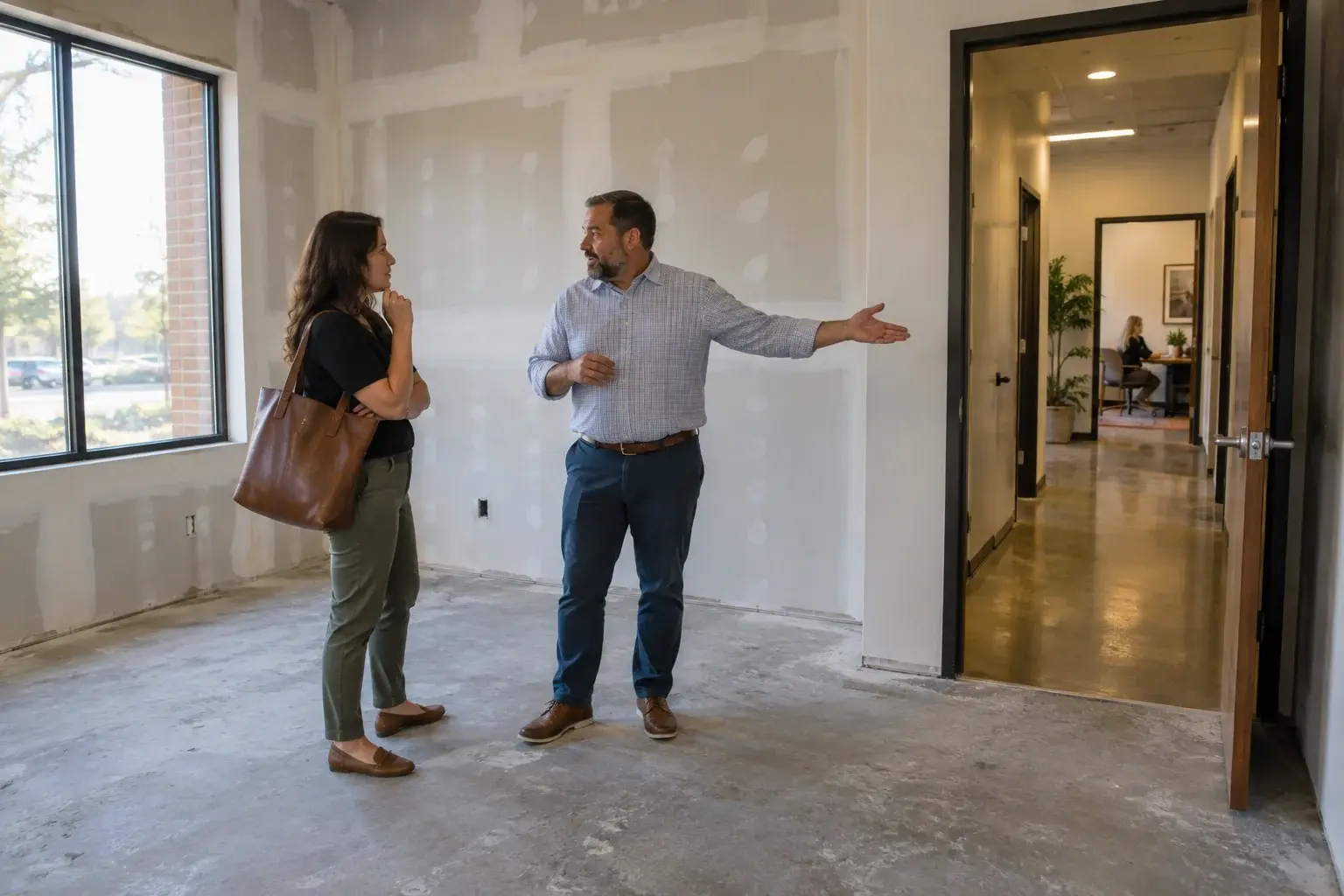
If you are thinking about buying or building a commercial property in Georgia, you may wonder whether you can lease out the space you do not need. Many owners want to rent extra rooms or suites to a tenant and let that rent help cover costs. With an SBA 504 loan, the answer is generally yes, but only within limits. This article explains how leasing out space in an SBA 504 building works, how much of the property you typically need to occupy yourself, and what to plan for before you apply.
Yes, in most cases. The SBA 504 loan exists to help small businesses own the real estate they operate from. It is not meant for landlords who plan to collect rent from other businesses. The SBA states that a 504 loan cannot be used for speculation or investment in rental real estate.
That said, owner-occupied does not mean you must use every square foot on day one. A growing business often buys a building with room to spare. Leasing out that extra space for a period of time is a common and accepted part of many 504 projects, as long as your business clearly is the main user of the property.
The occupancy test is the heart of this topic. The figures below are the ones generally described by SBA 504 lenders and development companies. Your exact requirement depends on your project, so treat them as a starting point.
Project typeTypical minimum owner occupancyWhat that means for leasingExisting building (purchase)At least 51% of rentable spaceUp to about 49% may be leased to other tenantsNew construction (ground-up)At least 60% of rentable spaceA smaller share can be leased, and the plan usually includes growing into more space over time
Rentable space means the usable floor area of the building, not the land or the parking lot. Your lender and the CDC will measure it, so ask how they count common areas before you commit to a building.
Say a business owner is buying an existing 10,000 square foot building in Macon. At a 51 percent minimum, the business would need to occupy at least 5,100 square feet. That leaves up to 4,900 square feet that could be leased to other tenants. If the same owner were constructing a new 10,000 square foot building, a 60 percent minimum would mean occupying at least 6,000 square feet from the start. This is an illustration only, not a quote or a promise of approval.
An SBA 504 loan is often called a CDC loan because a Certified Development Company (CDC) provides part of the financing. Georgia Small Business Capital (GSBC) is a CDC. In a typical 504 project, a bank or credit union provides the first-lien loan (the main loan that gets paid first if something goes wrong), the CDC provides a second loan backed by the SBA, and the business owner provides a down payment. Because the CDC is responsible for checking that the project meets program rules, it will look closely at your occupancy plan. You can read more on our SBA 504 loan program page.
When you lease space to another business, a few things generally matter:
Lease agreements are legal documents. Have an attorney review any lease before you sign, and talk with a CPA about how rental income may be reported.
It depends on the lender and the situation. Some lenders give limited credit for signed, in-place leases, while others focus mainly on your business cash flow. Do not assume rent from an empty suite will qualify you. The safer approach is to make sure your business can carry the payments on its own, and treat rent as a helpful extra.
No. A property bought mainly to collect rent from others is not the purpose of the program. If your goal is to build a real estate portfolio, a different financing route is usually a better fit. If your goal is to own the building where you run your business, a 504 loan may be worth a look. Our team can also walk you through the 504 loan process so you know what to expect from start to finish.
Leasing part of your building can be a smart way to grow into a property, as long as your business is the main occupant. Focus on three things: your occupancy share, a clear plan for any leased space, and a business that can carry the loan on its own. Before you make an offer on a building, call GSBC to talk through your plans. Georgia business owners can reach our team at 404-373-8601, or you can contact GSBC online.
Generally, yes. You can typically lease the portion of the building your business does not occupy, as long as you meet the owner-occupancy minimum and the property is not bought mainly as a rental investment.
For an existing building, the commonly described minimum is 51 percent of the rentable space. For new construction, it is generally 60 percent. Your specific requirement depends on your project, so confirm it with your CDC.
No. The SBA does not allow 504 loans for speculation or investment in rental real estate.
It may help in some cases, but lenders vary. Most focus on whether your business can repay the loan, so do not count on tenant rent alone.
Occupancy rules are part of the loan program, and falling short could create problems with your loan. If your plans change, contact your CDC and lender before making changes to the property.
Powerful, self-serve product and growth analytics to help you convert, engage.

